“Dangerous” Countries are My Favorite
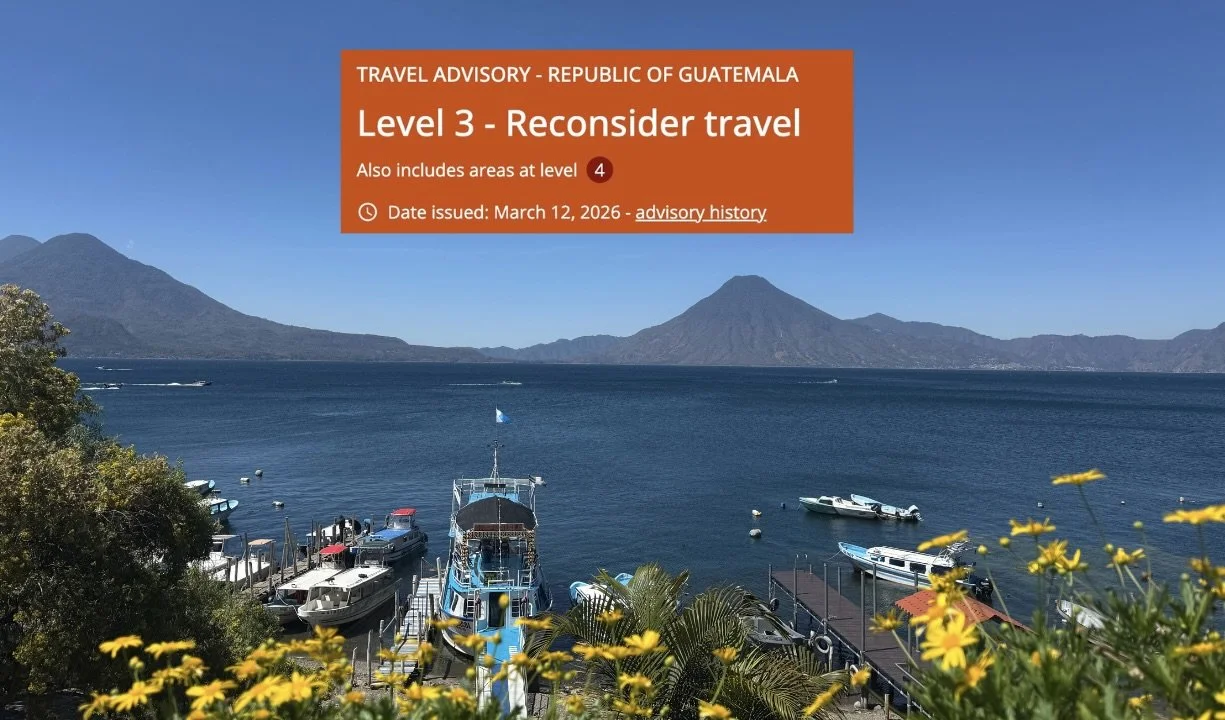
Travel Advisory Source: US Department of State
“I haven’t seen a single pickpocket in Guatemala.” Delivered 6:34 pm
“That just means they are really good ones.” 6:35 pm
I silence my phone and toss it on the bed with a huff. Walking out of my room, I find my host mom, whom we’ll call Alma, weaving a skirt on the couch. I just met her and will be spending the night in her home.
I have been to over 25 countries, and some of my all-time favorites are places many people consider dangerous.
What exactly makes Guatemala unsafe for a tourist? Most people cannot answer this question. Not factually, anyway. It’s an assumption—an assumption rooted in classism and racism. A poorer country does not immediately mean it is a dangerous country. I am, of course, not blind to the fact that there are dangers in Guatemala, but this overarching assumption is where I have a problem.
Last year in the US, there were 408 mass shootings (just a friendly reminder that there are only 365 days in a year). The smoking gun? That’s the lowest amount in five years.
There are many ways I could dive into how much that boils my blood, but let’s get back to the topic at hand. When crimes are committed in developed countries, we are more likely to excuse them. They do not represent the entire country or its people.
I know multiple people who have had their phone stolen straight out of their hands in London. I can’t go a day in Rome without being catcalled. But that’s just a few bad people, right? We put up with it and book our trip for next year.
But in a developing country? Blame and assumptions spread like wildfire through the developed world. Entire countries and people are unfairly labeled.
Many will never set foot in Guatemala, no matter how much wanderlust they claim to have. Most will never meet Alma.
“¿Cómo aprendiste a hacer eso?” I ask Alma how she learned to weave (after looking it up on Google Translate).
“Mi mama,” she smiles.
I shuffle through the few Spanish phrases in my head, attempting to keep the conversation going.
“¿Usted tiene hermanos?” Alma beats me to it, asking if I have any siblings.
I explain that I have an older and younger brother, “Sí, dos hermanos. Uno mayor y uno menor.”
Once she finishes weaving, she guides me to the kitchen to teach me how to make fresh tortillas.
Alma has premade the masa (dough). All I have to do is grab a small piece, roll it into a ball between my palms, and slap it flat. Easy enough, right?
Splat. My first attempt falls flat on the kitchen floor.
“Lo siento.” I apologize to Alma. She tells me it’s okay and encourages me to try again.
I grab another piece of dough. Alma moves at lightning speed, the loud slap of the dough between her palms the thunder.
I get a couple of decent smacks in before the masa starts to stick to my hand. After a few more tries, I manage to get a couple on the stove.
The only danger I face here is consuming too many tortillas.
Alma’s kindness and hospitality reminded me of a man I met in Mostar, Bosnia & Herzegovina last year.
It was very hot the day I arrived in Mostar. Too hot to be wearing leggings and two huge backpacks, but there I was. I found my way from the bus station to Hostel Miran as sweat tickled my spine.
At the front desk, I was greeted with a friendly smile. The middle-aged man offered me his hand. “Welcome, and nice to meet you. I’m Miran.” Miran? Like from the name of the hostel?
I’m used to hostel chains with young people filtering in and out from behind the desk. After all, you don’t walk into a Ralph Lauren store and expect to meet Ralph himself.
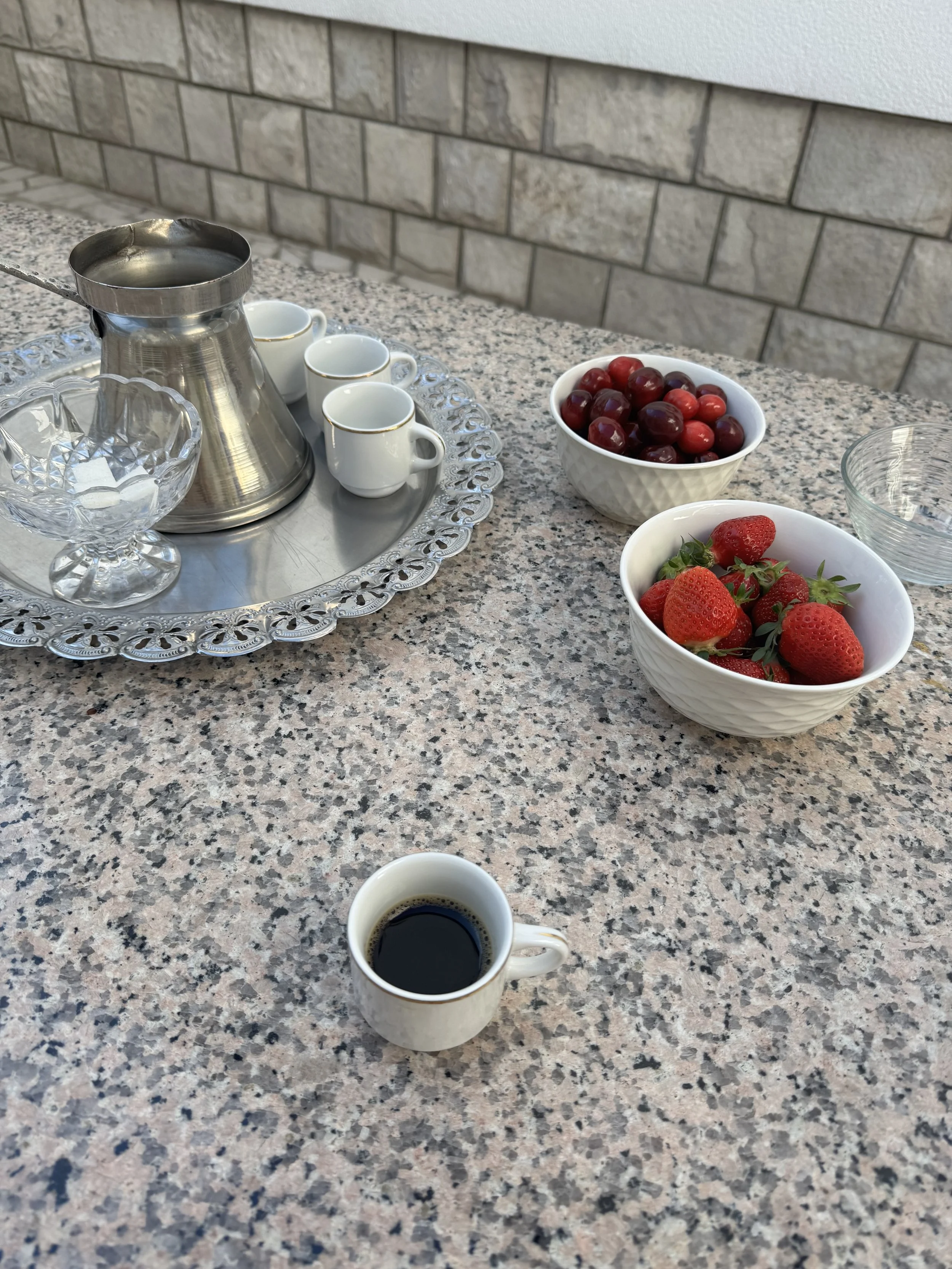
The hostel was quiet, as most are in the middle of the day. All my future friends were out exploring, so Miran invited me to share fruit and fresh Bosnian coffee in the hostel’s courtyard.
Unlike Western social norms of avoiding politics and religion when you first meet someone, Miran jumped right in because you can’t talk about Bosnia & Herzegovina without discussing politics and religion.
He told me about the war and what life was like here only 30 years ago. Before this trip, I didn’t know anything about the Bosnian War aside from the fact that it happened.
He pulled up a video on his phone of Croat soldiers atop a hill in Mostar shooting down at the local Bosnians. In that exact spot now stands a large cross.
“Any religious symbol is a sign of peace,” Miran claims. “You can’t place a religious symbol where you killed people from”.
As he tells me this, the hostel volunteer, who looks about my age, passes through the courtyard with bed sheets in her hand, going about her daily duties.
Miran gestures to the volunteer as she disappears into another room. “I am Muslim. She is Jewish. She is one of the best volunteers I have ever had.”
Miran’s three sentences had simplified what I had begun to feel in Bosnia: a strong desire for peace. While this country was being attacked just three decades ago, there is an openness to others that surprised me. Every tour guide I had was truly thankful that we had chosen to visit their country. “Please tell your friends you had a good time and felt safe here” was a common sentiment. Despite the cards they had been dealt in recent years, they yearn to move forward, not just as Bosnians, but as humans.
As I sit down for dinner with Alma, I think about what it would be like if Miran were here having dinner with us. An Irish-American Jew, a Guatemalan Christian, and a Bosnian Muslim around the table. Based on what I know of Alma and Miran, I think it would be the most riveting dinner.
Alas, Miran is not here, and he will likely never meet Alma, but you can. Always do your research to ensure you travel safely, but I ask you to dig deeper than the general assumptions about countries and their people. You’ll miss out if you don’t.