Food & Freedom In Croatia
“Enjoy your food and enjoy your freedom” are the words that hit me like a freight train when I received my lunch in Split, Croatia.
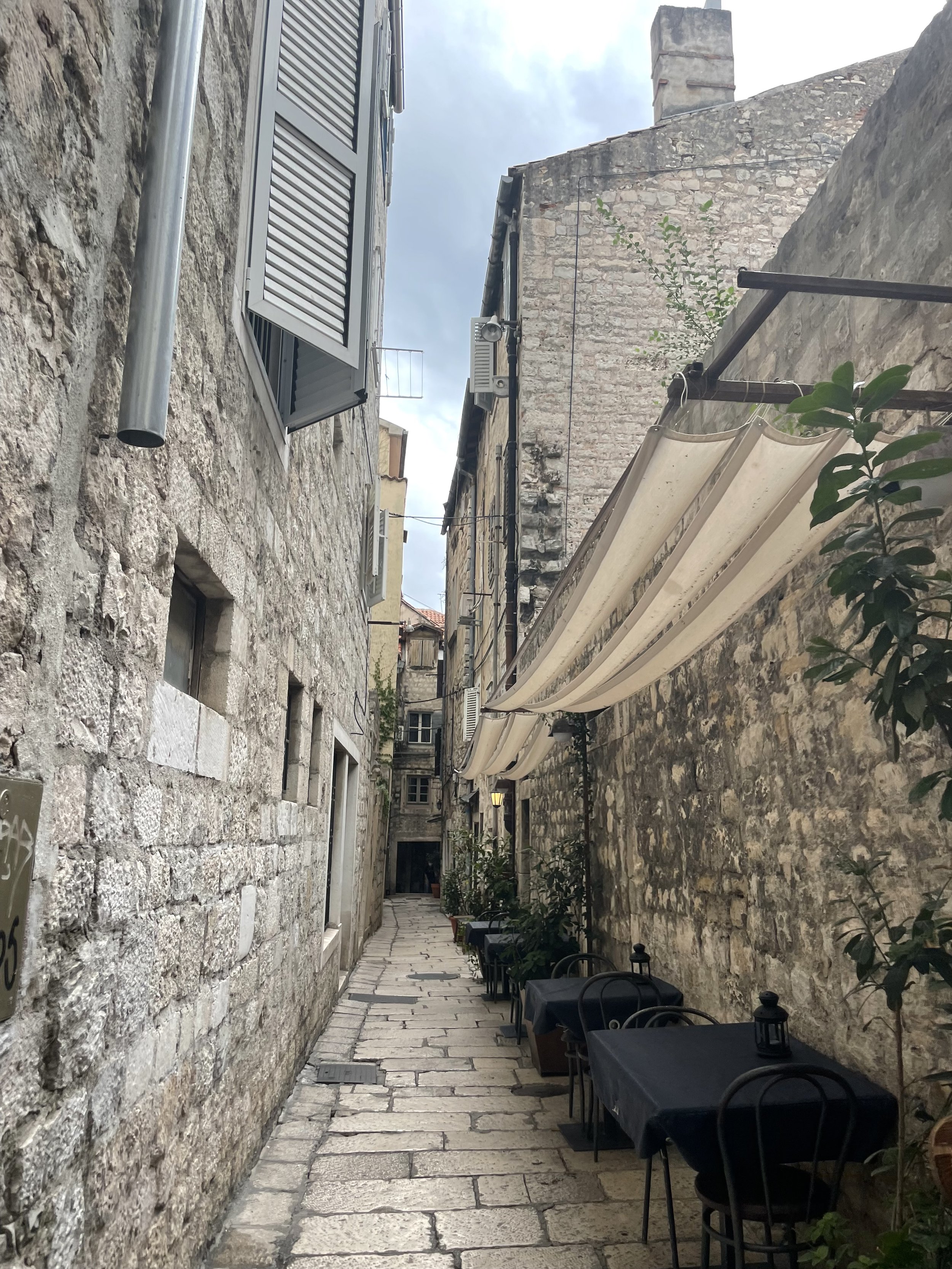
I had spent the morning roaming the city's narrow walkways. Limestone buildings provided shade from the blistering summer sun as my stomach cried out for fuel. I stumbled upon a salad restaurant built into the side of one pathway. There was no door, just a step up to determine me “inside” the restaurant. As the 20-something Croatian man behind the counter built my salad, he asked me where I was from—as if my valley girl accent wasn’t a dead giveaway. I responded, “The United States”. Without skipping a beat, he replied, “Ah, the land of the free,” to which I smiled and nodded to the familiar expression. The last thing I expected was for him to hit me with his simple yet loaded statement about freedom that would ring through my mind for the rest of my time in his home country.
Croatia only gained independence from the Socialist Federal Republic of Yugoslavia 34 years ago, in June 1991. Even after gaining independence, war broke out between Croatia and its Serb minority when they declared their own independence from the republic and desired to join Serbia. The war resulted in over 20,000 deaths and hundreds of thousands displaced.
While Croatia is not completely innocent when it comes to the role it played in the Yugoslav Wars, I can sympathize with the remnants of war and the battle for independence that its citizens still feel today.
Now, Croatia is one of the most visited countries in the Mediterranean. While we tourists enjoy the cliffside beaches and explore the filming locations from Game of Thrones, there is a larger daily impact of the country’s history on its people.
When I arrived at my hostel in the capital city of Zagreb, I was greeted by the hostel’s lovely owner, Ivan, who led me inside to check in. The walls were covered in colorful and bright floor-to-ceiling paintings that made me feel like I was on a psychedelic trip. As I handed Ivan my Kuna (the local currency at the time), I asked him why cash was the main form of payment throughout the country. Almost every establishment was cash-only or had large fees for card payments. I assumed it was because locals were trying to use their Kuna before January of the following year, when the country would officially switch to the Euro (ten years after joining the European Union). Ivan explained the Croatians’ preference for cash stems from distrust of the government. Given Croatia’s unsteady history with independence, many locals do not trust the government or large banks with their money, so they hold on to their cash. The young man’s statement from Split rang through my mind once again.

That night, I sat out in the hostel’s back garden. The glow of the stars mixed with that of the string lights in the blackcurrant tree hanging overhead. As I chatted with the other guests, Ivan made us glasses of Gemišt, a popular Croatian way to drink white wine by mixing it with sparkling water. As we all wrapped our hands around the large glasses that looked more like small fish bowls, we sipped the refreshing Gemišt and exchanged names and where we were from. There were guests from Israel, New Zealand, and Brazil. The irony hit me that all of our home countries have had rocky histories with freedom, and yet we all felt so at peace with each other in a country still in the infancy of its independence. Freedom had never occurred to me as something to enjoy, it felt like a guarantee. While no country is perfect, my time in Croatia and that young man’s words opened my eyes to the privilege of being raised in a free country.